
July’s Progress So Far
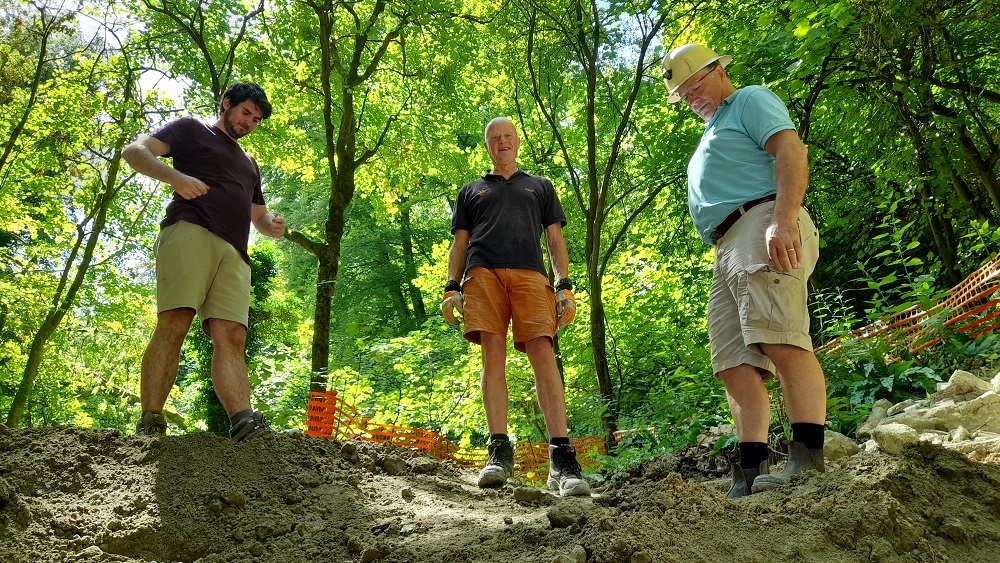


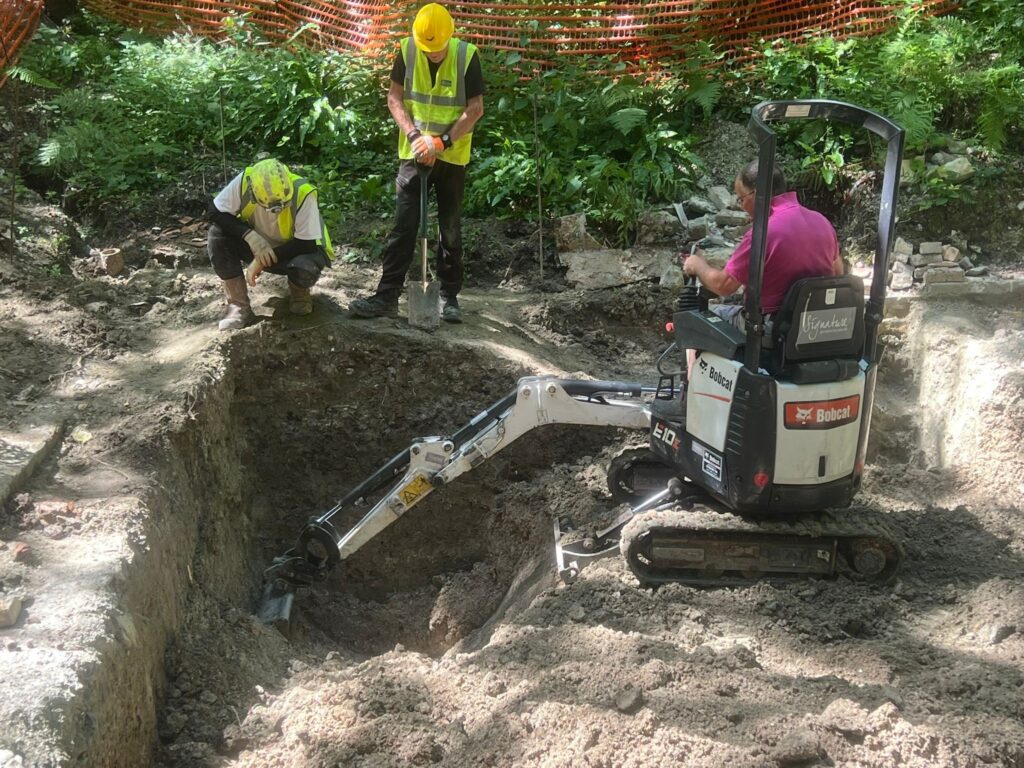
It has been some time since we reported any progress here, but we have not been idle. There have been seven visits to site since 27th June – two of these to complete the recovery of window glass from the two remaining sides of the building, and the remaining sessions have been focused on gaining depth in the central well pit. This culminated in the use of a small “Bobcat” excavator with which we probed at three locations to determine where the well itself is likely to be located within the pit.
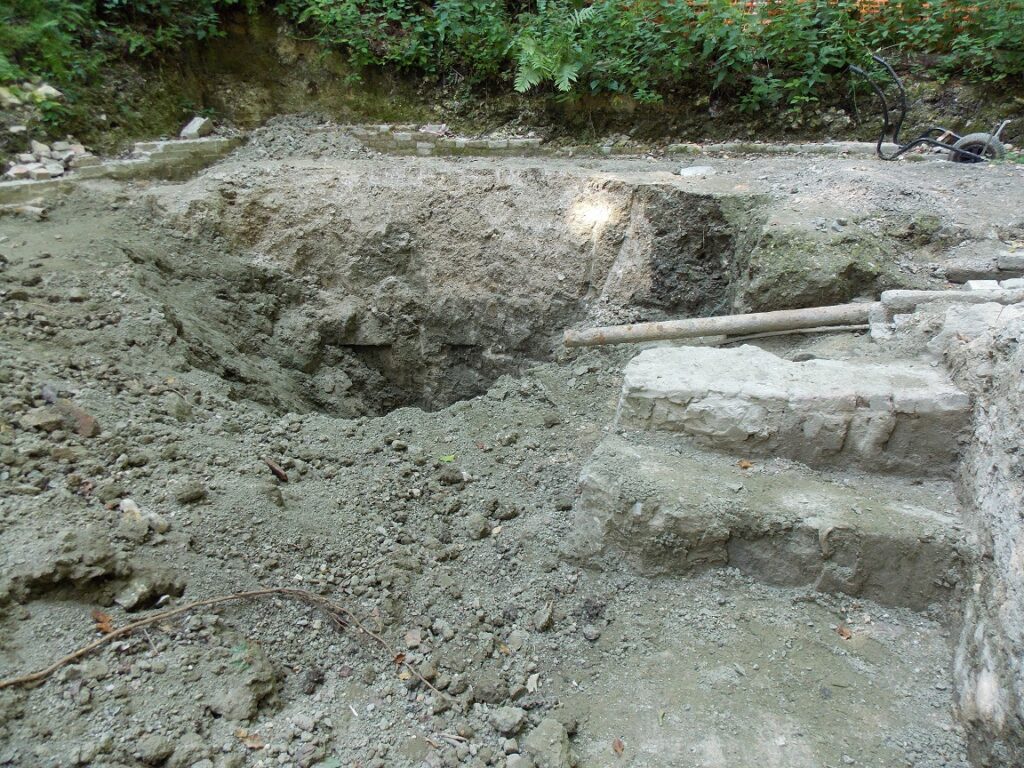
The north-eastern side of the pit has proved to be the most interesting. This is the one side where the side of the pit is comprised of original stone, the other three sides appear to be built up with stone or rubble and then covered in cement render. We have drilled down using a hand auger close to the north-west rock face to some considerable depth and have not hit any solid ground. This is also the area that the cast iron water pipe that comes through the south-east wall is pointing towards. We will be focusing our attention at this location from now on.
Perhaps now is a good time to look at some of the finds that have come to light. Some of these are useful for providing dates, some demonstrate the nature of the building, and others are just evidence of local traders in the Reigate area.
With all the glass sampling inside the building completed, we now have some idea of how windows were arranged in the building. The two end walls probably each had a window located centrally. Glass found along the two side walls suggests there were possibly two windows or skylights covering the middle of the building.
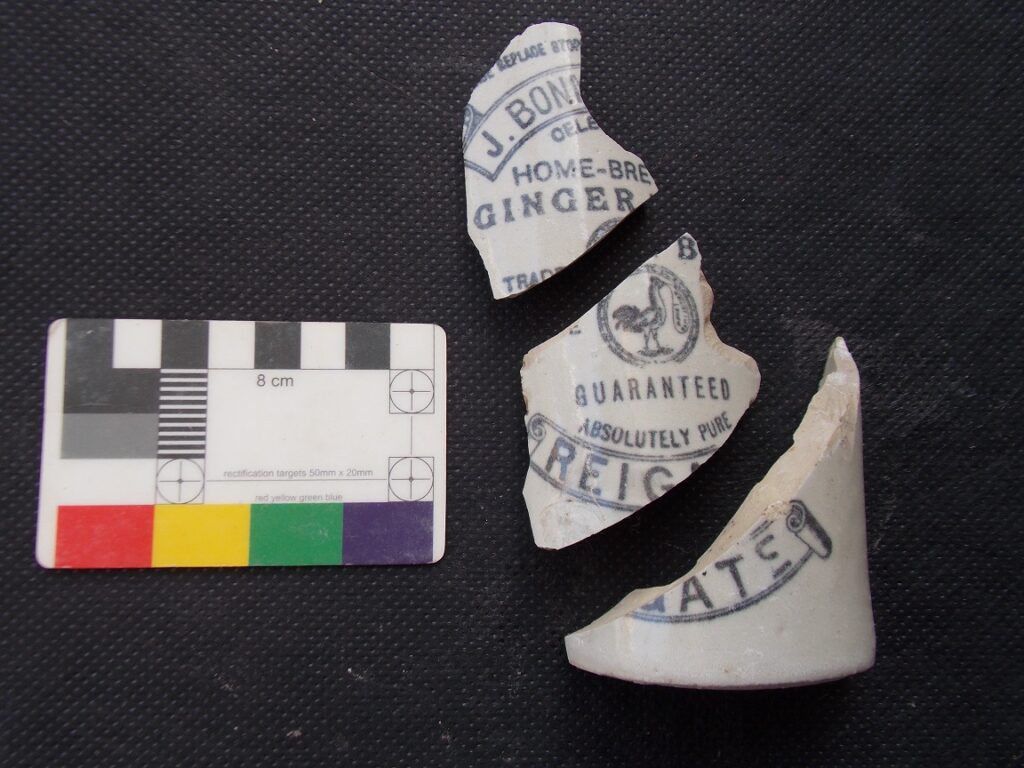
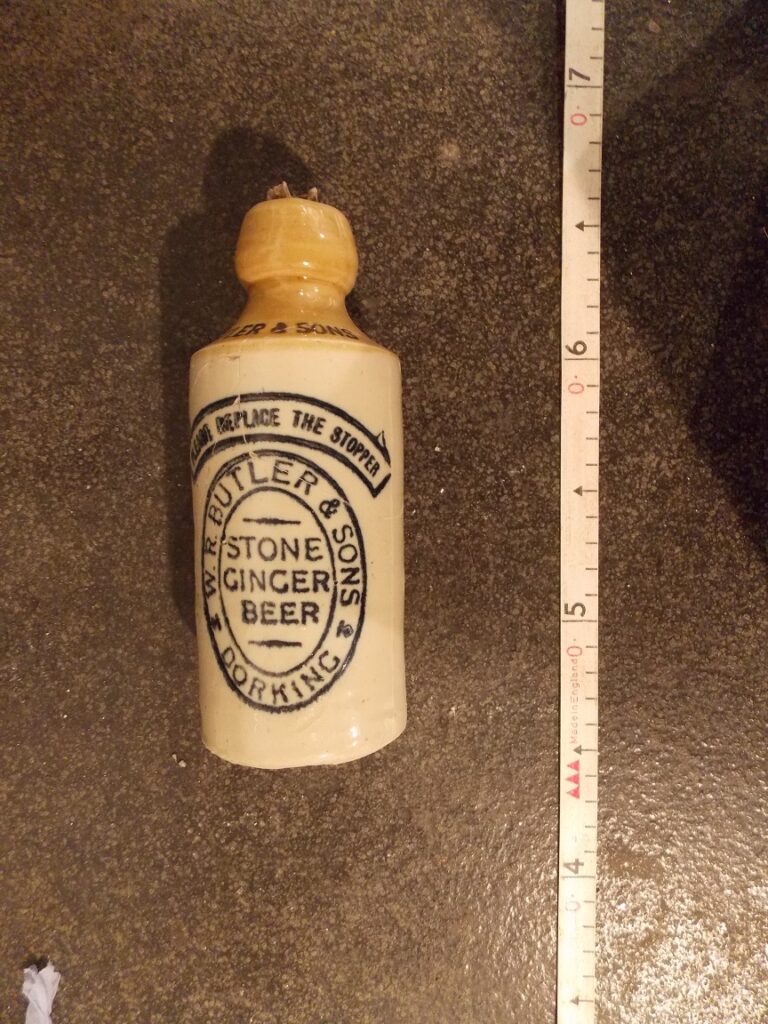
A large number of bottles, mostly smashed, have been found. Some are from the mid-twentieth century but earlier bottles from the time of the pumphouse are branded with the names of local drinks manufacturers such as Bonny’s and the Reigate Brewery, the latter also known as Mellersh and Neale. Pieces of “White’s” bottles turn up with monotonous frequency!
Building debris includes many broken tiles, including pieces of ridge tile, bricks, fragments of cement render, and a few short nails for fixing tiles to roof batons. With few bricks being found, we can speculate several alternative reasons. The bricks were salvaged, or most of the bricks were thrown into the well pit and lie out of reach at some depth, or the building was largely a timber structure set on half walls.
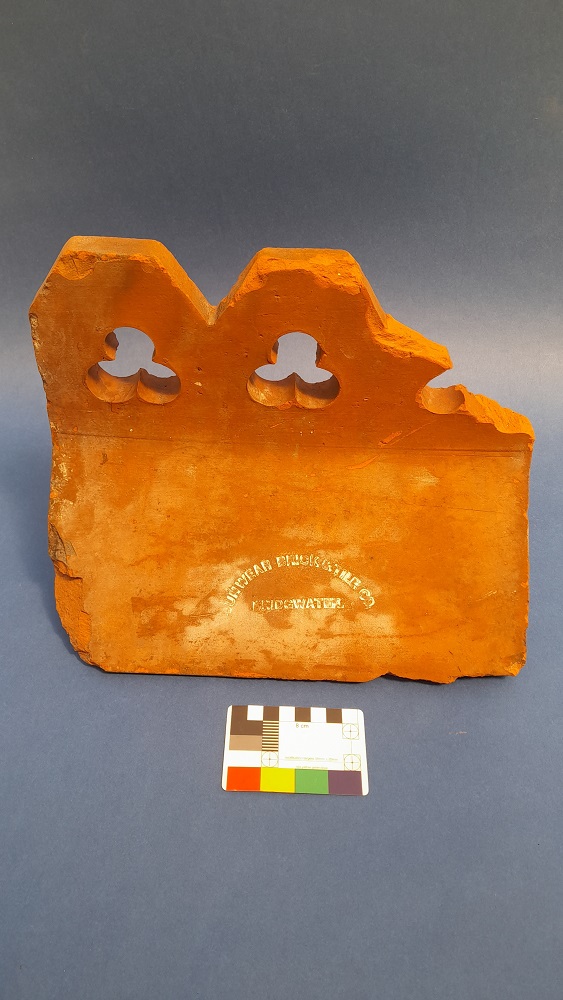
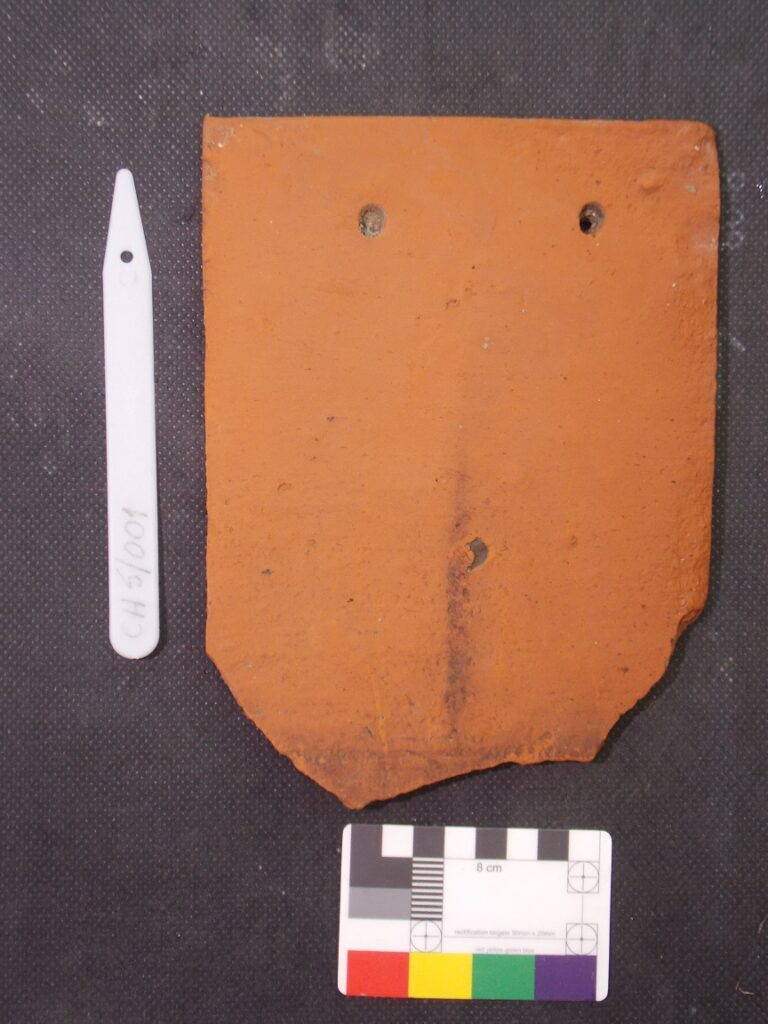
We have also found pieces of cast iron guttering and rainwater downpipe, uncovered a short length of a cinder track leading around the south-east side of the building. We hope to investigate the area immediately outside the building more thoroughly in the coming weeks.