
As the sun went down, so did we!
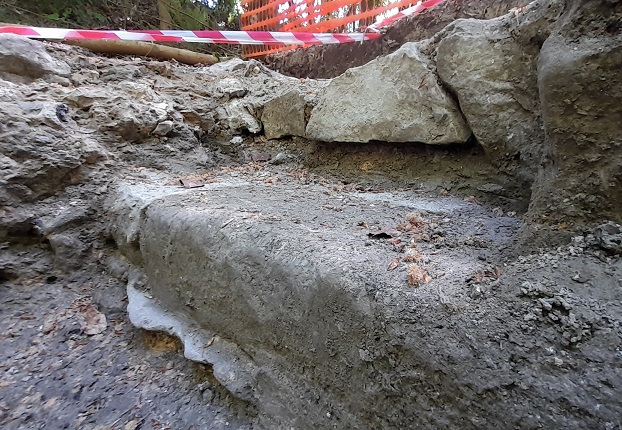


With the lighter evenings and the continuing dry weather, the team has opted to do some excavations during the week after work. As cavers we are quite used to working in the dark and once the sun goes down we just get out some portable lights and carry on. What is a little more challenging, however, is recording the progress at the time and a return the following day with a camera, tape, and notebook is the best way to capture the features found on the previous day.
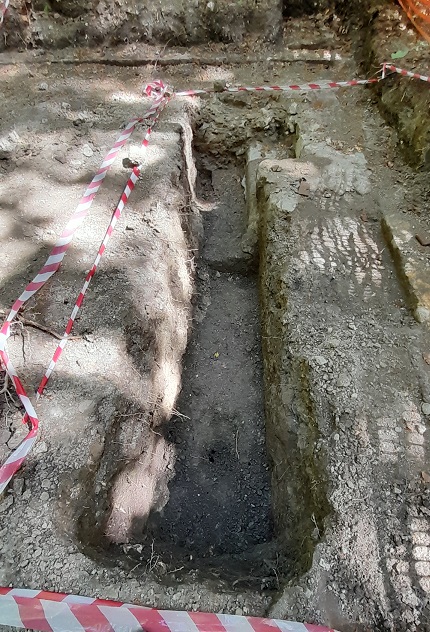
Our first evening session took place on 29th April. We further exposed the steps found previously but did not dig much deeper but instead investigated the side of the pumphouse pit to a safe depth. We confirmed our suspicions of where the south west side of the pit lies, and that it is roughly rendered. A small piece of micaceous flagstone found suggests that the internal floor, such as it was around the edge of the building, may have been stone slabs which were removed for repurposing when the well was filled.
A further evening session took place on 6th May when we did much the same thing but this time we ran the trench along the south east side of the room from the steps to discover the nature of the deeper layers there. We uncovered a curious compact chalky layer rising gently from the steps towards the in situ pipe in the centre of the building, It remains to be seen what this layer represents. It lies beneath a mixture of chalky greensand infill and some building rubble.
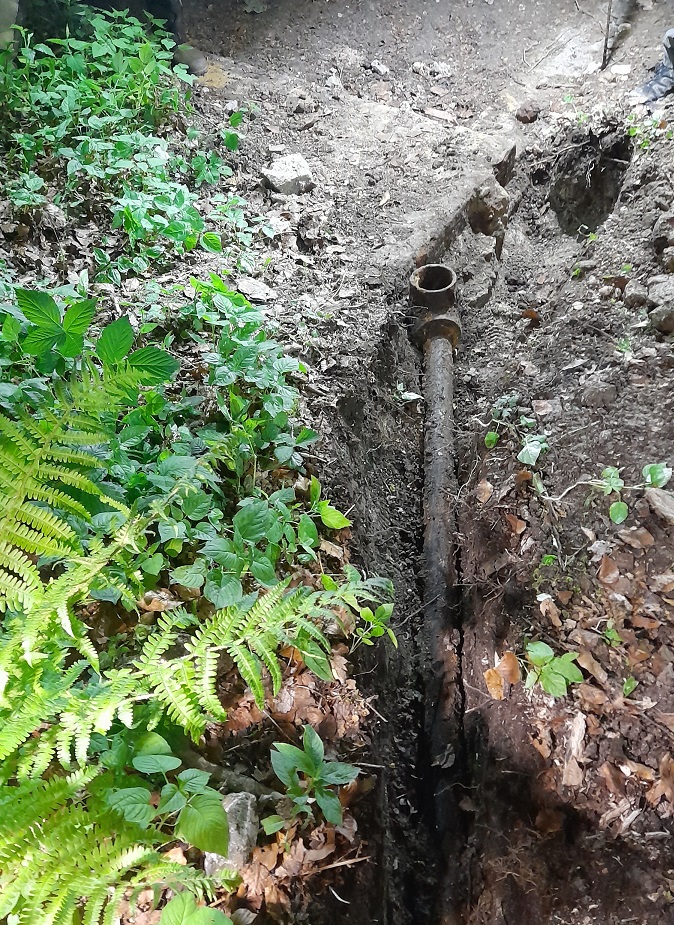
In another spot we investigated the brick pillar base at the western corner of the building to see whether it had been constructed on the bedrock lying beneath the structure. It appears that this is not the case, however we did discover a length of 3-inch cast iron pipe lying at an angle outside the building and running slightly uphill, probably lying on the former ground level where it had been thrown down. At one end was a 4-inch elbow joint, incompatible with the pipe itself, and we have yet to come up with an explanation of what purpose this pipe may have had. It is far too sturdy to have simply been a drainpipe from the building’s gutters.