
A Step in the Right Direction
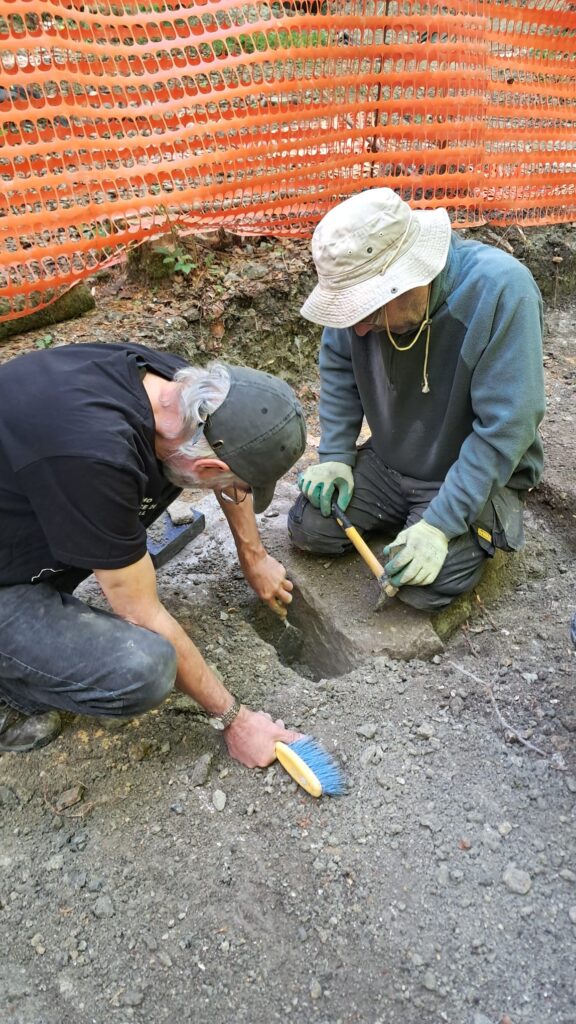


It didn’t take us long to decide where to start with our proper excavations now we have the whole area stripped of most of the overburden. In one corner of the building, two curious stones had been exposed poking through the soil and rubble of the building. Slowly digging down the side of one of the stones, it soon became apparent that it has been carefully cut, and after some time we started to think it might be the top of some steps. You can find a few more photos of the day’s work in our photo blog galleries.
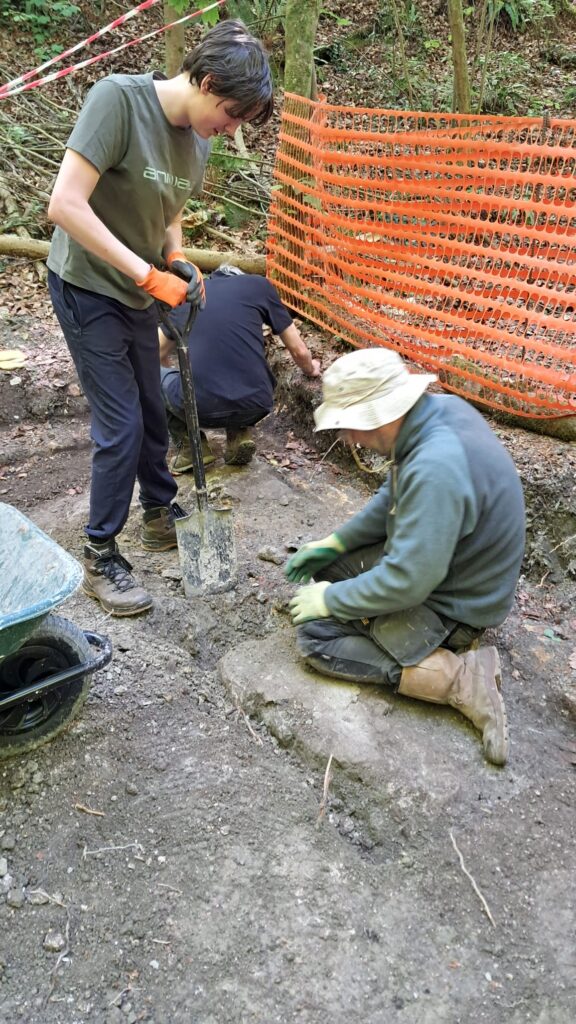
Elsewhere in the pumphouse, a start was made uncovering features previously discovered in 2015, providing a point of interest to visitors and plainly showing the building’s association with the local water supply. A significant length of 3-inch diameter cast iron water main leads from the middle of the building to a point outside the south-east wall. This pipework also includes a large one-way valve which prevented water flowing back into the well when the pump wasn’t working. All of this was uncovered by the end of the day.
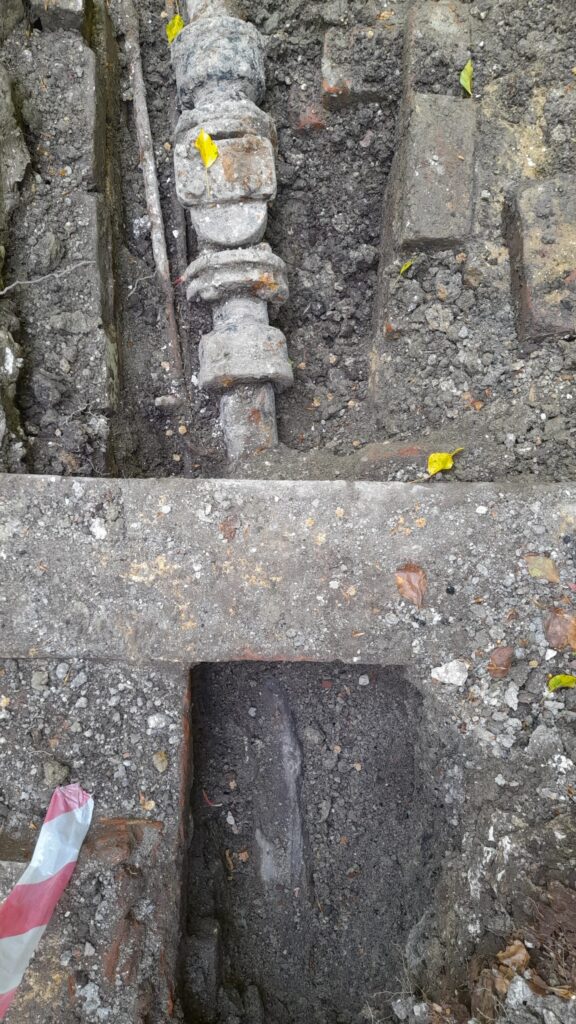
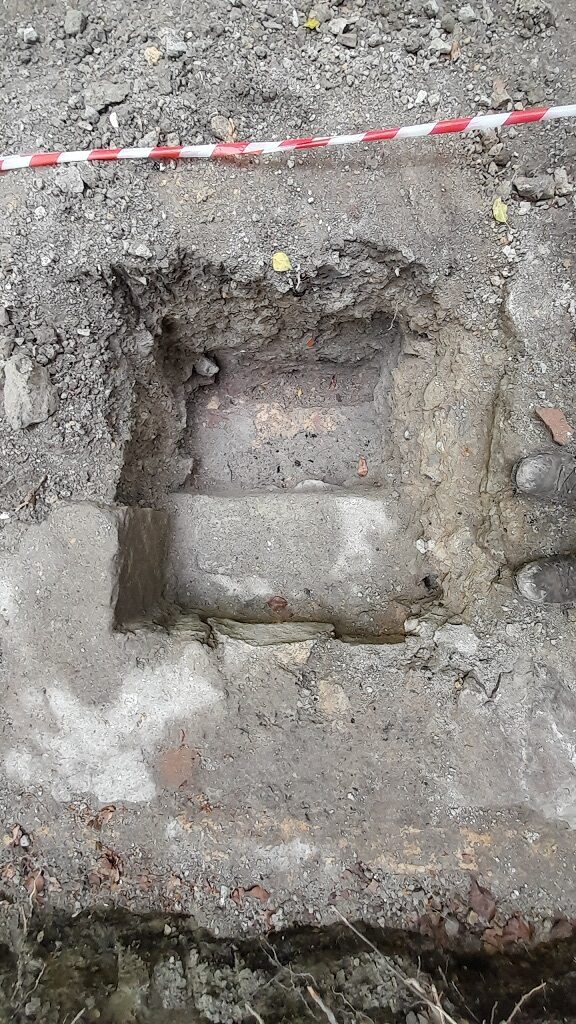
Work continued at the step. The first step down was 30cm deep comprising a stone slab repaired with a brick, and the next step below that was also reached although this one was in a poor state, comprising rubble held together with mortar. The right-hand wall of the stairwell going down was a very roughly made concrete mix using local stone and cement.
There were very few significant finds today. The area of the top of the step yielded a few lumps of coke which we initially assumed were simply fuel for the steam engine’s boiler, but on cleaning were found to be attached to mortar and other aggregate. It seems likely that the coke found its way into a very rough concrete mix as part of the internal structure of the building.
A large square iron nut was found, which was possibly part of the structure of the building. The butchered end of a very large bone came out of the demolition layer. A small piece of cement render indicated another possible characteristic of the old building.
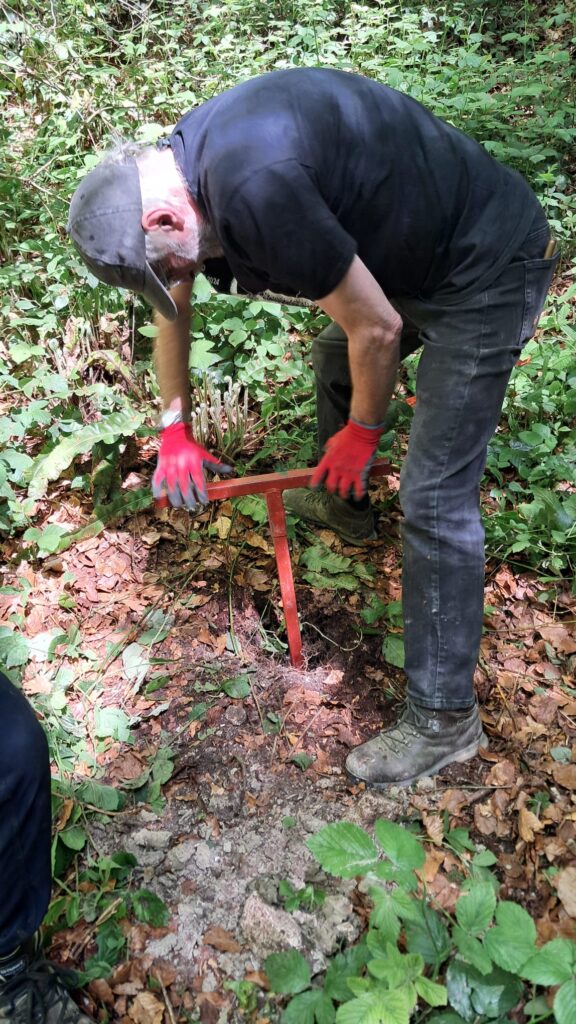
Quite a few local memories include a spring of fresh water running from the corner of the wood down to the well. This spring and stream are marked on the 1895 Ordnance Survey map, so we made an attempt to see what might still exist at the site of the spring. Using an auger we bored down about a metre, but the ground was dry and compact and it was very hard work. We may well return to this job at a later date.
While at the dig today, we were visited by a group of school students and teacher doing a practice Duke of Edinburgh Award Bronze level expedition from Oakwood School. They were very interested in what we were doing!