
The Horseshoe Pit is now a sheltered dell surrounded by mature beech trees. When the sun comes out, it is a beautiful spot. It might come as a surprise therefore to discover that it is in fact an abandoned quarry dominated by a large spoil heap.
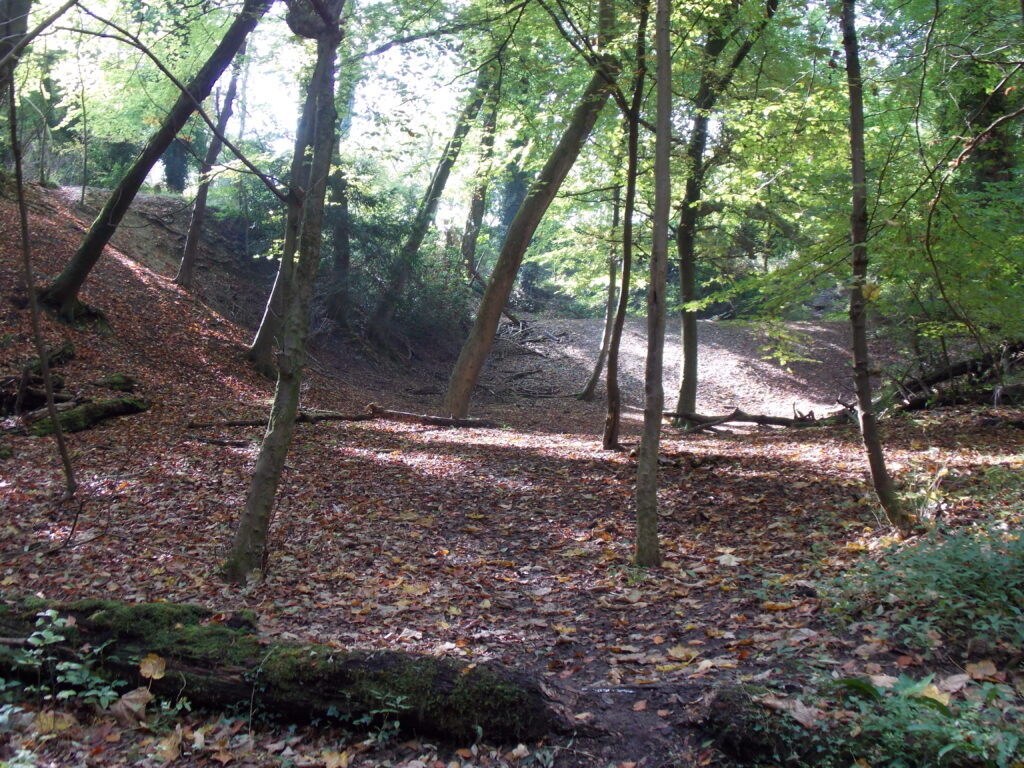
Horseshoe Pit is part of a larger area historically known as Colley Pits. Horseshoe Pit was dug in the nineteenth century for building stone (Reigate stone) and hearthstone by opencast methods. Historically, both these materials were usually mined in Surrey from underground workings. However, at Colley, although mining did take place well into the twentieth century, the beds of stone were also quite amenable to being dug from the surface. In fact, a large amount of the available stone at Colley Pits was dug this way, the main limitation for the surface quarrymen being the steep rise of the North Downs to the north.
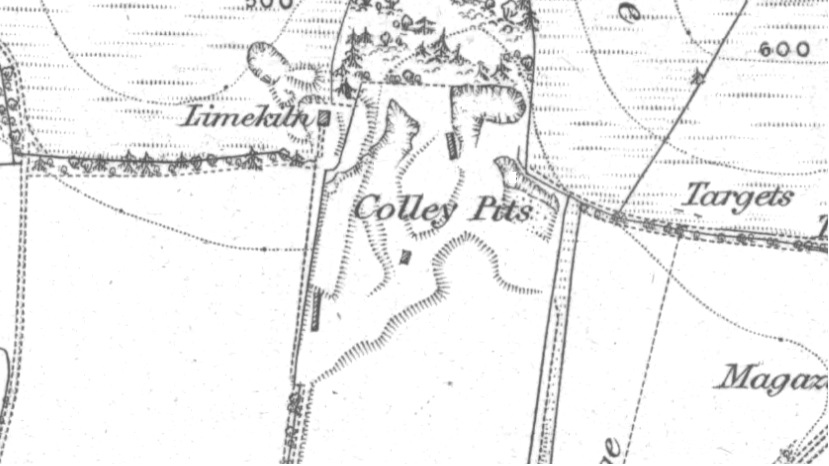
In 1869, an account in the Building News journal described pits worked by Mr. W. Carruthers. “The top bed in the quarry is sent to London for scouring purposes and is known by the name of “hearthstone;” the second bed is used for road making and rough walling, also for the floors of glass furnaces, &c. and the third bed for architectural purposes.”
The 1st Edition OS plans (1869) represent the pits being worked at the time. The open pits continued to expand until around 1900. In the Horseshoe Pit, you can still see the top of the quarry face high up on the northern side, and the steep bank to the south is the edge of a large dump of overburden, although it doesn’t look like an artificial surface with its mature tree cover.
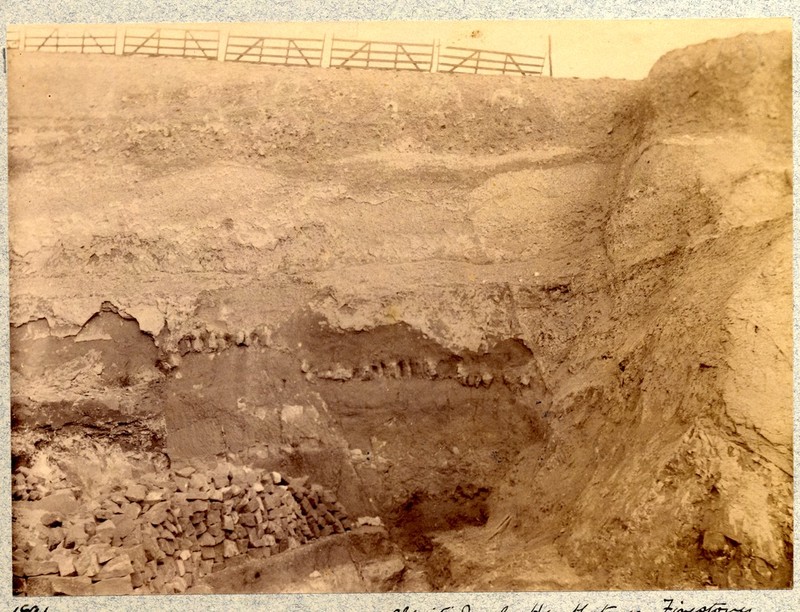
The last pit to be worked this way at Colley Pits was recorded by a visiting geologist and a photograph taken gives us an idea of what the pits might have looked like.
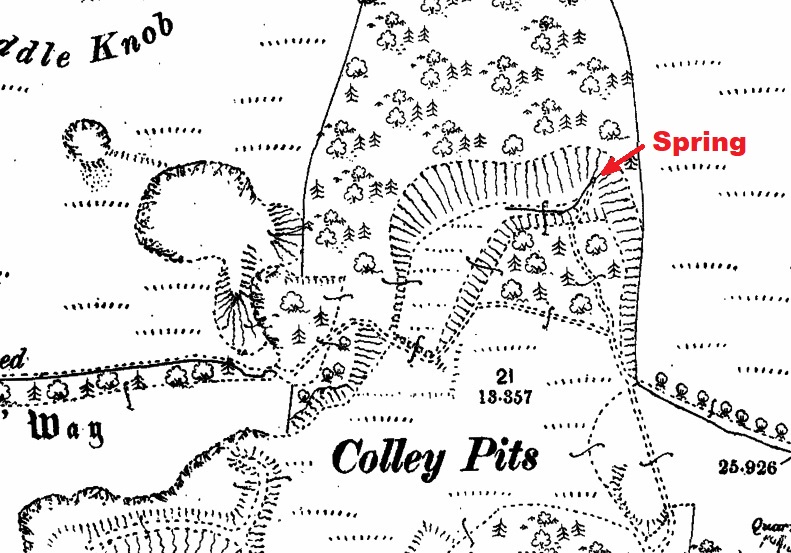
At the Horseshoe Pit it seems likely that by digging away the face of the hill in the 1890s the quarrymen had exposed a spring in the hillside and the water they released flowed down into the pit and disappeared into the ground at a particular spot. You can even see the line of this stream on the Ordnance Survey map published around that time. Curious to see where the water was going and keen to add to his growing water supply business, in 1898 George Taylor instructed his men to dig. The result was a well that he claimed entered an underground lake which would yield a significant supply of water. In reality, this doesn’t mean a vast open chamber full of water – this is just fanciful thinking. But what they had found was that as they pumped the water to the surface the bottom of the well didn’t dry up but was rapidly replenished by water flowing in from the surrounding rock.
By 1900, Taylor was promoting a business idea to supply Reigate with water from his well at Colley. Despite lobbying Reigate Corporation and publishing his idea in the trade press, he failed to get any support for his plans and the well remained just a private source of water for Taylor’s estate. It isn’t known when the well fell into disuse. In a letter to the Surrey Mirror in 1910, George Taylor’s bailiff W. Fairs suggests that the Colley well might be put into working order again, in reply to enquiries about the future of the Kingswood Water Co. The wellhouse is shown on the 1912 Ordnance Survey map but just as an unmarked square building. We are lucky to have the memories of a few people who grew up in the area. The spring was still flowing well into the 20th century. Local historian Charles Reason born in the 1890s and writing in 1981 recalls: “There was a disused pit with a lovely fresh water spring and Mr Taylor installed a steam engine in it to pump the water up to Kingswood and many a time I have stood and watched the old pumps and drunk the spring water.”
Unfortunately, no photographs of the pumphouse are known.
Peter Burgess, Wealden Cave and Mine Society. March 2026